

A Brief History of Schizophrenia
Posted: Wednesday, June 17th, 2026
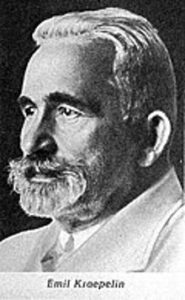
Schizophrenia has been around for a long time. References to people who were clearly insane appear in classical writings and the Bible, for instance in Mark 5 we hear of the Gerasene Demoniac who, “All day and all night among the tombs and in the mountains he would howl and gash himself with stones”. In fact ,the oldest recorded description of an illness like schizophrenia dates back to the Ebers Papyrus of 1550 BC from Egypt. Descriptions of episodes of madness involving hearing voices, seeing visions and erratic and unruly behaviour start to appear in the literature from about the 17th century.
In the medical profession schizophrenia was first described by Dr Emil Kraepelin in the 19th century pictured above. He was director of the psychiatric clinic at the university in Estonia. He first used the term dementia praecox or premature dementia and he believed that the condition always had a steadily worsening course over time or if there was any improvement it would only be partial. We now know that that is not the case for most people.
Although Kraepelin’s understanding of schizophrenia was still incomplete his work was pioneering in the way that he distinguished the condition from the other psychotic disorders such as bipolar disorder.
Later Dr Eugen Bleuler developed Kraepelin’s ideas on the diagnosis of the condition and first used the term schizophrenia. Significantly he believed that patients did indeed show a distinct improvement over time.
The enlightened leaders of the Victorian age built large institutional asylums into which people with schizophrenia were confined often for many years and sometimes for life. Although some of these asylums were later exposed as abusive, at the time they were built, they were seen as a compassionate alternative to confining lunatics (as they were then called) in prison or to life on the streets where they were prey to those criminals who would seek to exploit them.
In the middle of the 20th century scientists developing new types of antihistamine drugs found that the new drugs were also effective in controlling the psychotic positive symptoms of schizophrenia. This was the first generation of the new antipsychotic medicines.
With the development of the new antipsychotic drugs, which were effective at controlling the positive symptoms of the illness such as hallucinations and delusions, the concept of care in the community which had already been born in the USA evolved at a pace. The new practice would involve people being looked after in their own homes rather than in hospital, with hospital stays being reserved for people in crisis.
The beneficial humanitarian effect of the antipsychotic medicines should not be underestimated. Before the introduction of these drugs in the UK about 70% of people with a diagnosis of schizophrenia were continuously confined in mental hospitals often for years at a time: today it is only about 5% and the average length of stay in hospital is measured in months.
Today there are about 220,000 people being treated for schizophrenia in the UK by the National Health Service (NHS). Treatment with antipsychotic medicines remains the mainstay of treatment in the NHS although many also benefit from talking therapies running alongside the medications. In the UK at least great progress was made in the treatment of schizophrenia during the 20th Century. However, Schizophrenia still remains one of the most serious public health challenges facing humanity today.
(Image: Wellcome Collection on Wikimedia Commons)
<< Back to blogShare This